hu meaning in text is a question many people search when they notice this short expression appearing in chats, social media, texting apps, and online conversations.
In today’s fast-moving digital communication, even two-letter words can carry strong emotional tone, hidden intent, or contextual meaning. The term hu is often used to show confusion, curiosity, surprise, or a casual response, depending on how and where it appears.
Understanding the hu meaning in text helps readers avoid misinterpretation, improve conversation clarity, and respond more confidently in modern slang-driven messaging. This expression is especially common among younger users, informal chats, and quick replies where tone matters more than grammar.
Knowing its contextual usage, possible variations, and implied emotions can make online interactions smoother and more meaningful. If you want to stay updated with text abbreviations, chat slang, and internet language trends, understanding hu meaning in text is essential for clear and confident communication.
Meaning & Definition of Hu in Text

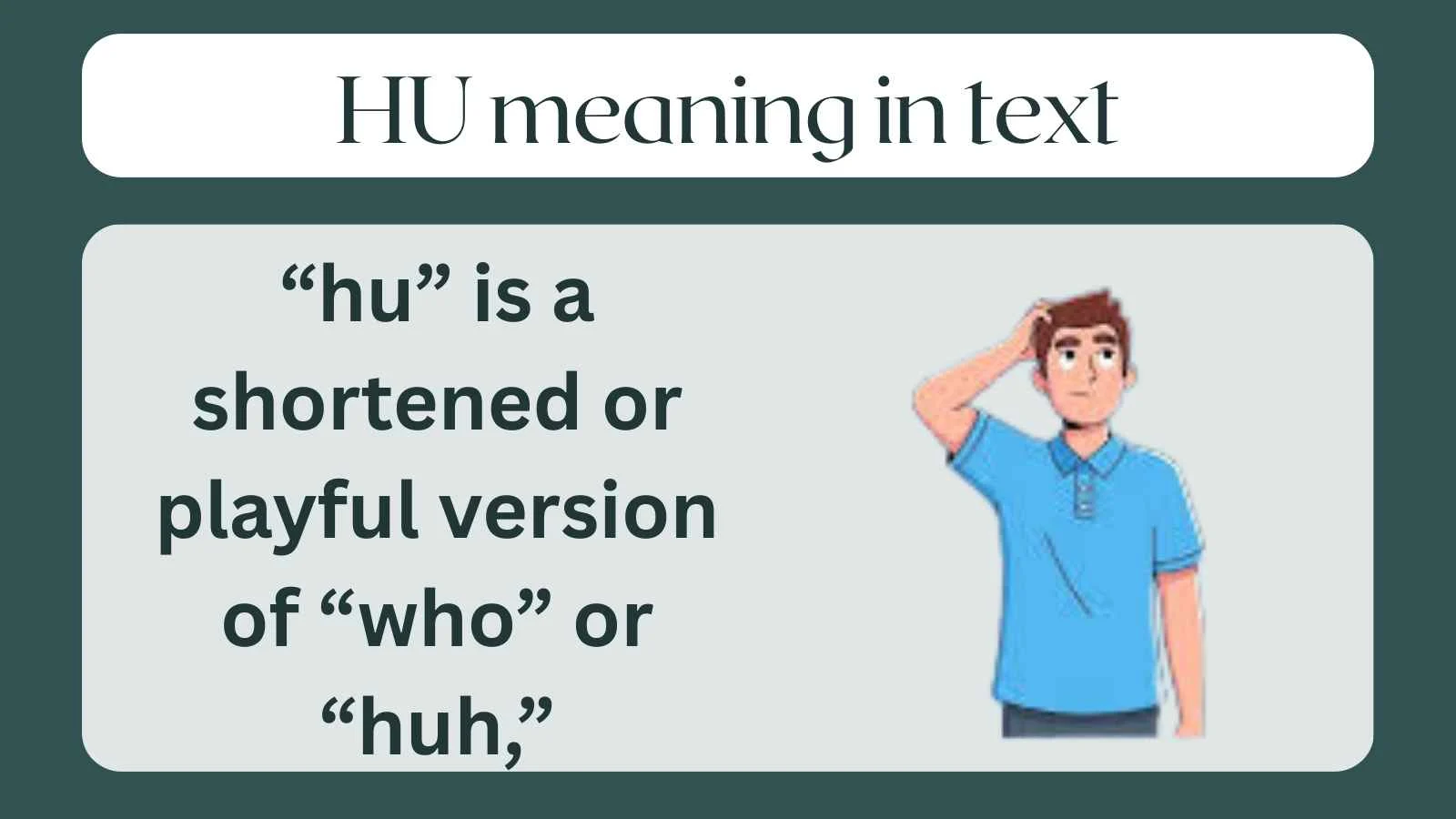
The hu meaning in text usually refers to a casual, informal expression used in online conversations. In most cases, “hu” is a shortened or playful version of “who” or “huh,” depending on the context.
Primary meanings include:
- As “who”: Someone may type “hu” instead of “who” when responding quickly.
- As “huh”: It can express confusion, surprise, or a request for clarification.
Secondary meanings depend on tone and context:
- A soft reaction to unexpected information.
- A conversation filler used to keep a chat going.
- A flirty or teasing response, especially in dating apps.
Because “hu” lacks punctuation, its meaning often relies on the previous message. Reading the flow of conversation is key to understanding it correctly.
Background & Origin of the Term
The term “hu” has no single official origin. It evolved naturally from fast typing habits and informal online communication. As messaging apps became popular, users began shortening words to save time and effort. “Hu” emerged as a quick substitute for “who” or “huh,” especially on mobile keyboards.
In some regions, pronunciation also influenced spelling. People typed what they heard or felt natural to say. Over time, this shorthand became familiar in chats, comments, and replies. Unlike formal abbreviations, “hu” spread organically through everyday use rather than being defined by dictionaries.
Usage in Different Contexts

The hu meaning in text changes slightly based on where and how it’s used.
- Casual chat: Shows confusion or curiosity.
- Group conversations: Used to question someone’s identity or role.
- Dating apps: Can sound playful, curious, or mildly skeptical.
- Professional settings: Rare and generally inappropriate.
Examples:
- “Hu said that?”
- “Hu? I didn’t get it.”
- “Hu are you talking about?”
Tone matters. A friendly chat may read it as lighthearted, while a formal context may see it as unclear.
Meanings Across Platforms
Different platforms influence how “hu” is interpreted.
- WhatsApp: Often means “who” or “huh,” depending on the message.
- Instagram: Used in comments to express confusion or curiosity.
- TikTok: Appears in replies reacting to surprising videos.
- Snapchat: Casual reaction, sometimes playful or teasing.
On visual platforms, emojis often clarify intent, making the meaning easier to understand.
Other Fields Where Hu Appears
Outside texting, “hu” can have unrelated meanings:
- Physics: Symbolic usage in formulas (rare and context-specific).
- Medical: Abbreviation in specialized documentation.
- Aircraft or technical fields: Short codes or internal references.
These meanings are not connected to texting slang and should not be confused with casual chat usage.
Common Misconceptions & Mistakes
Many people misunderstand “hu” as:
- A typo only, when it can be intentional.
- Rude or dismissive, which is not always true.
- A universal abbreviation with one fixed meaning.
The biggest mistake is replying without understanding the context, which can cause awkward conversations.
Similar Terms & Alternatives
| Term | Meaning | Usage Style |
|---|---|---|
| who | Asking about identity | Formal/neutral |
| huh | Expressing confusion | Casual |
| hm | Thinking or unsure | Informal |
| eh | Mild reaction | Casual |
How to Respond to Hu
Responding correctly depends on intent. Here are natural replies:
- “I mean John 😊”
- “Sorry, let me explain again.”
- “Haha, surprised?”
- “I’m talking about the new project.”
Keep replies clear and friendly to move the conversation forward.
Differences From Similar Words
“Hu” differs from “huh” because it’s shorter and more casual. Unlike “who,” it lacks formality and clarity. It relies heavily on context rather than grammar.
Relevance in Online Conversations & Dating Apps
In dating apps, “hu” often signals curiosity or light confusion. It can open conversation if handled well. A clear, friendly reply helps maintain interest and avoids misunderstandings.
Popularity & Trends Over Time
Search interest in hu meaning in text has increased as slang evolves. Google Trends shows steady curiosity, while social media usage reflects casual adoption rather than viral spikes.
FAQs
What does hu mean in text?
It usually means “who” or “huh,” depending on context.
Is hu rude in messages?
No, it’s generally neutral and casual.
Can hu be used professionally?
It’s better avoided in formal communication.
Why do people use hu instead of who?
For speed and informal tone.
Is hu common on dating apps?
Yes, often as a playful or curious response.
Conclusion
Understanding the hu meaning in text helps you communicate more confidently online.
While it may seem confusing at first, “hu” is simply a product of fast, informal digital conversation. Its meaning depends on context, tone, and platform, making awareness essential.
By recognizing how and where it’s used, you can respond naturally and avoid misinterpretation. Whether you see it in a casual chat, a social media comment, or a dating app message, knowing its intent allows smoother communication.
As online language continues to evolve, small terms like “hu” remind us how flexible and creative digital conversations have become.

Ranker is the witty mind behind PunStop.com, serving daily doses of laughter and clever wordplay. Passionate about puns, humor, and keeping smiles alive. Turning everyday moments into pun-filled adventures, one joke at a time!”